
أنت هنا
Not All Jobs Are Created Equal
By Dr Jemimah Njuki
Over the past few months, numerous multilateral development banks have gathered for their Annual Meetings, where one message has been consistent: creating jobs is essential to reducing poverty. Yet one equally important point has often been overlooked - not all jobs are created equal.
It is not enough to create jobs - we need to create decent jobs.
At the African Development Bank, we treat jobs as central to Bank President Sidi Ould Tah’s strategic vision, known as the Four Cardinal Points, which were endorsed by the Bank’s Governors during the Annual Meetings held at the end of May 2026.
Africa faces a dual challenge on jobs: rapid labour‑force growth alongside persistent job quality deficits, particularly for women. Jobs that are low‑paid, informal, unsafe, or insecure do not lift households out of poverty nor drive inclusive growth. At the same time, survival-based entrepreneurship does not create adequate and liveable incomes for households. The focus must shift from job creation alone to decent jobs.
So, what do we mean by decent jobs?
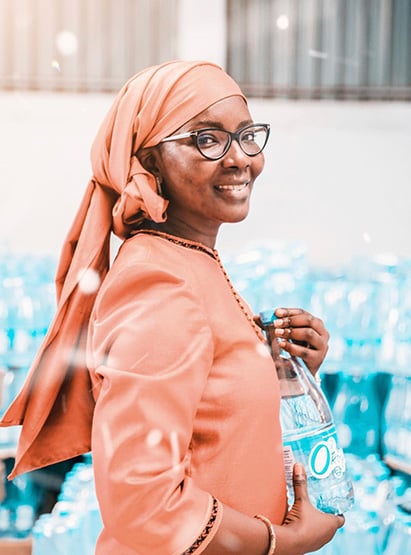
In Senegal, the Bank’s Project to Support and Promote Women’s and Youth Entrepreneurial Initiatives supports the formalization of decent jobs and improved business management
One criterion is that employment opportunities must provide a fair and adequate living wage, meaning an income that enables a worker to afford a decent standard of living for their family, and to cover essentials such as food, housing, healthcare, education, savings and emergency funds. It reduces working poverty and preserves dignity. This is context specific.
A second is safe and healthy working conditions and basic rights at work. The ILO Declaration on Fundamental Principles and Rights at Work, adopted in 1998 and amended in 2022, affirms a safe and healthy working environment as a fundamental right. Others include freedom from discrimination and harassment, the rights to organise and bargain collectively, family and medical leave, and protection from forced and child labour and retaliation.
A third criterion is access to social protection including health, maternity, pensions and more. Too many jobs, especially in the informal sector, remain uncovered. And gender gaps in social protection remain pervasive. A 2024 UN Women report shows that a staggering two billion women and girls are without access to any form of social protection.
And we need to ensure that jobs created in both formal and informal employment are decent. This matters in Africa, where over 80 percent of women’s employment is informal and concentrated in low-productivity, low-pay work. Decent jobs mean equal pay for work of equal value, freedom from harassment and exploitation, maternity protection and childcare, secure income, predictable hours, and the chance to move into higher‑value roles and leadership.
How can we secure decent jobs, including for women?
First, by prioritising investments in high‑potential sectors where good jobs for women can be scaled with the right policies, including agribusiness and food sectors, health and the care economy, manufacturing and industrial value chains, green economy, and climate and energy-related jobs. Evidence shows that investing in the care economy generates three times as many jobs as investment in construction, while also ensuring that women have access to care services.
Further, by ensuring that job creation is accompanied by policies and government regulations, including labour standards and social protection systems, that are inclusive. Wo
Decent jobs turn economic growth into poverty reduction and inclusive prosperity. For women and men alike, this is a social goal as well as a macroeconomic and development imperative for Africa.
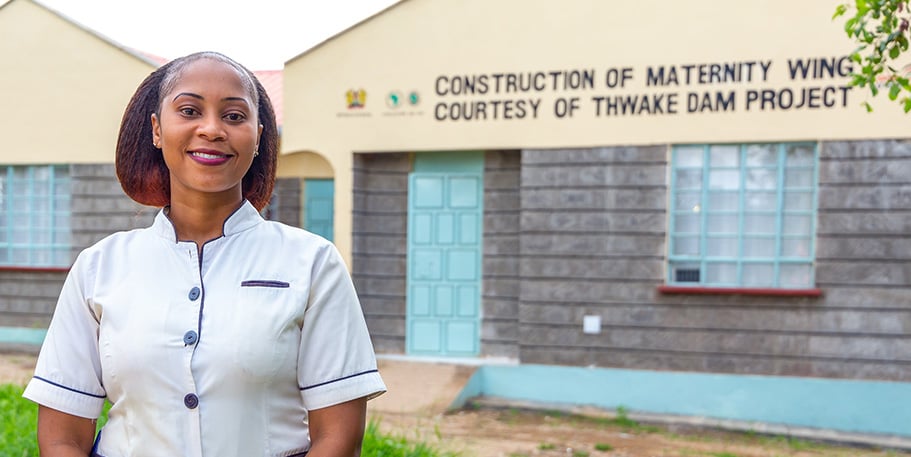
Nurse Mercy Musau at Kathulumbi Health Center in Kenya says the Bank’s Thwake [Dam] Multi-purpose Water Development Program improved her working conditions as well as health care services to local communities.
About the author
 Dr Jemimah Njuki is Director for Gender, Women and Civil Society at African Development Bank Group