
You are here
Economic Transformation
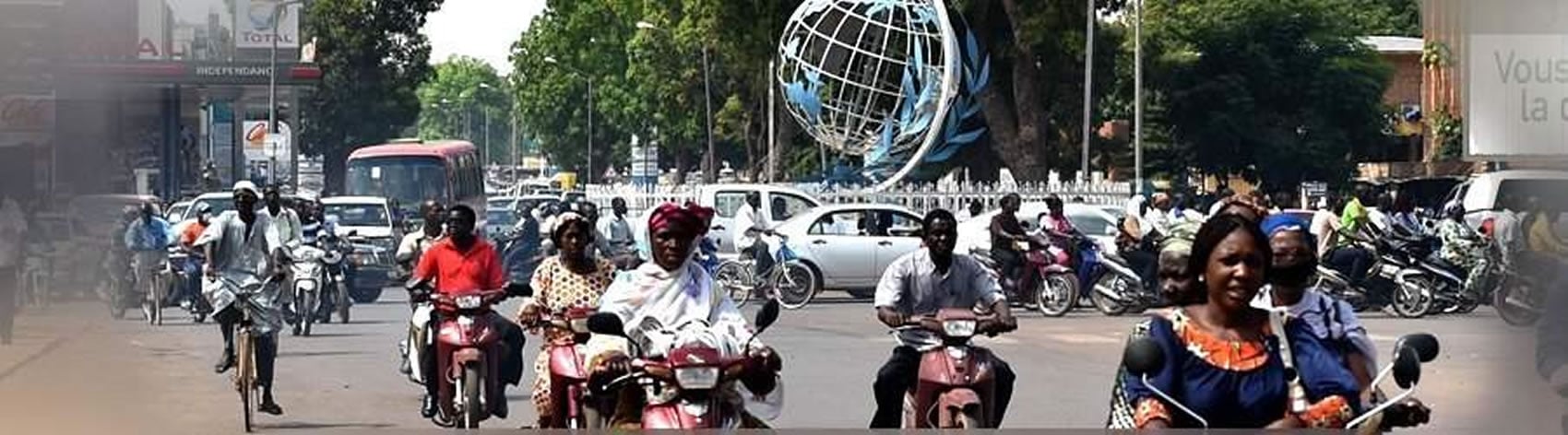
Measuring the pulse of Economic Transformation in West Africa
West Africa is at the heart of Africa’s transformation. With a projected growth rate of 7.4 per cent in 2014, it is the fastest growing region in the continent. As many of its countries undergo a strong stabilization, emerge from conflict, or even rise to middle income status, the region begins to reap the fruits of its regional and global integration. A global demand for expert opinions and analysis is rising rapidly.
| 26 Nov 2015 |
Improving the lives of women in Guinea-Bissau over the long termRepeated political upheavals have, in the past 40 years greatly undermined socio-economic progress and the institutions needed for gender-equitable development in Guinea-Bissau. In the wake of a successful transition period, the African Development Bank and UN Women have led the work on a forward-looking gender profile to take stock of the gender situation and seek ways to address pending issues. The study relies a lot on women’s associations and civil society which have worked to address women’s needs, and provided recommendations and advocacy on gender issues for the 2013-14... |
| 23 Nov 2015 |
From extractive resources to human development: Opportunities for health and education in West AfricaMy previous posts discussed how much revenues West African countries can expect from new discoveries of extractive resources, and what are the choices facing policymakers in utilising these revenues. In this piece, I will try to focus on how these revenues can be used specifically for investments in health, education skills and other tangible development outcomes. What can really been achieved, and how? The chart below gives a general picture of the opportunities in Sierra Leone, Ghana and Liberia in terms of health and education funding from natural resource revenues. The figure takes a... |
| 24 Oct 2015 |
Getting small-scale farmers to adopt better practice: A tale of contrasts from Ghana and BeninOne of the reasons why agriculture in Africa has been lagging behind the rest of the world is because small-scale farmers are often reluctant to adopt better but unfamiliar practices. How can this cycle be broken? This article looks at two contrasting responses to adaptation – one in Ghana and one in Benin – and the impact they have produced. Rice has replaced maize as the favourite staple in many West African countries, but low crop yields mean that a substantial volume of the grain has to be imported at the cost of billions of dollars. The native variety of rice is perfectly adapted... |
| 16 Oct 2015 |
Food Security: A film dedicated to the Food Crisis Prevention Network (RPCA) tells a Sahel and West Africa success storyOn the occasion of World Food Day, the Sahel and West Africa Club Secretariat (SWAC/OECD), in collaboration with the Economic Community of West African States (ECOWAS), the West African Economic and Monetary Union (UEMOA) and the Permanent Inter-State Committee for Drought Control in the Sahel (CILSS), is launching a film dedicated to the Food Crisis Prevention Network (RPCA). The objective is to raise awareness about the success of the Network, which for 30 years has been engaged in the fight against food and nutrition insecurity in the Sahel and West Africa. The West Africa... |
- « first
- ‹ previous
- 1
- 2
- 3