
You are here
Who Holds the Key?
By Darline Tognia, Coordinator, Urban and Municipal Development Fund (UMDF), African Development Bank Group
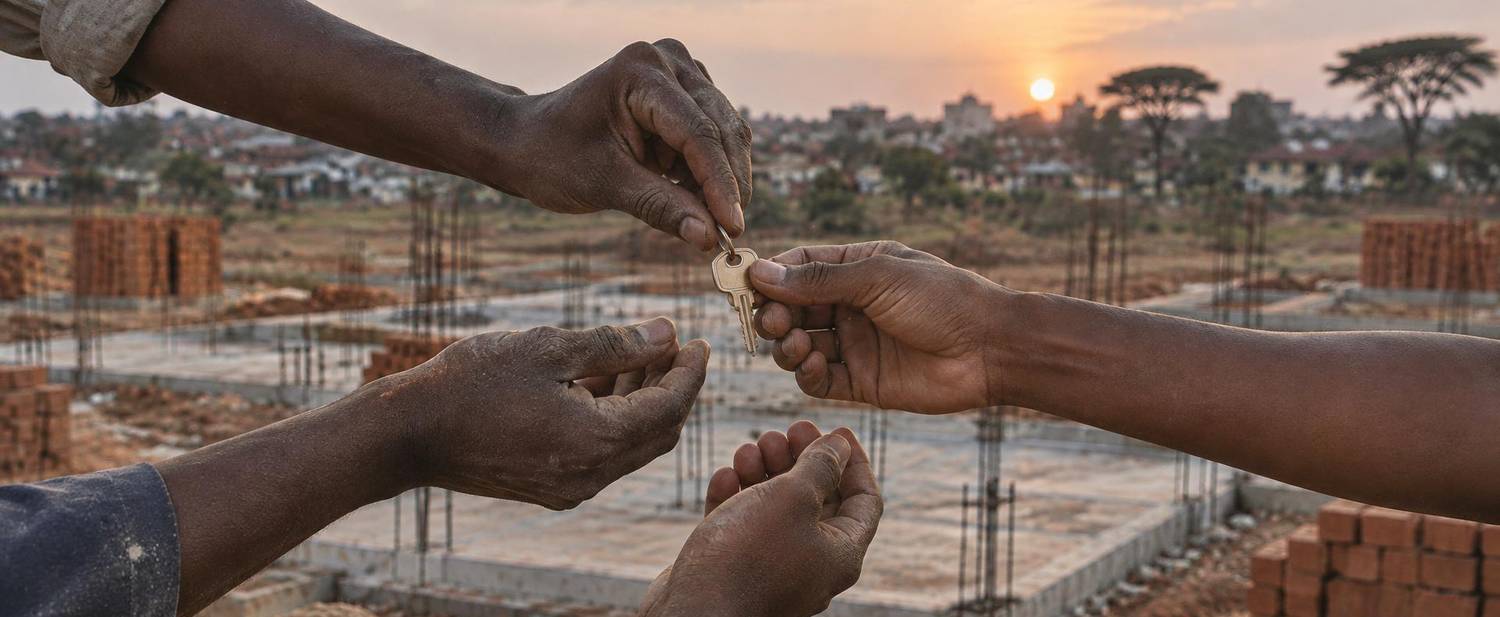
Kenya needs 250,000 new homes every year. It builds 50,000. This is not a building problem: construction firms know how to build. What is missing is capital, and before capital, the work that makes it possible. Each year, 200,000 families do not receive a key.
The theme of this year’s World Cities Day centres on regenerating the city: adequate housing for all. “Adequate” is not a vague word. It is a standard: a home must be connected, affordable, safe, and close enough to work to be worth living in.
The theme has two sides: cities must improve what already exists and put a decent home within reach of the people living there.
The Urban and Municipal Development Fund (UMDF) works on both sides. The UMDF is a project preparation fund dedicated to urban development, hosted by the African Development Bank Group. Seventy African cities have drawn on its support. The fund does not build homes or lend money. It pays for the work that comes first: preparatory studies, financial structuring and safeguards. It is also the hardest stage to fund.
Kenya illustrates what this means for a home.
Accessible and adequate housing is a fundamental right in Kenya, under Article 43 of the 2010 Constitution, yet the deficit is above two million homes. Mortgage lending is under three per cent of GDP. A trader with no payslip cannot borrow, no matter how much she has saved. The answer is a levy on workers’ pay, matched by an equal contribution of their employers, and managed by the Affordable Housing Board. The money is Kenya’s own: wages, and the firms that pay them. The programme reaches cities across the country. But the money must still pass through the Board, an adviser, investors, lenders, developers and a municipality before one key changes hands.
The UMDF funds one link in that chain: USD 250,000 to support advisory services to structure the transaction, towards a target issuance of USD 5.8 billion. Kenya is expected to raise that money, not the UMDF. This is President Sidi Ould Tah’s first Cardinal Point: enhancing access to capital by mobilising Africa’s own financial resources.
A key opens the door; services make it a home
In Johannesburg, the African Development Bank lent ZAR 2.5 billion (about USD 136 million), for water, sanitation, waste management and electricity in a city already built. It was the Bank’s first direct lending to a subnational entity in Africa. The loan is the Bank’s while the UMDF’s share is technical assistance. Beside that USD 136 million sits USD 1.5 million for preparation, USD 500,000 of it going into billing, revenue collection and investment planning. The aim is a stronger financial system inside the city itself.
In Cape Town a UMDF grant of USD 193,016 funded a climate risk assessment, completed in July 2026. It named informal settlements, incremental housing and backyard dwellings as the places most exposed to heat, flooding and wildfire. These are homes that already exist. What they lack is not walls but services. The city’s new water plan puts water and sanitation first, where poor services hit women and girls hardest. A proposed heat-monitoring network would place sensors in the most vulnerable areas. About 4.8 million residents should benefit.
Modest sums can travel a long way
For USD 30,000, the UMDF funded an affordable housing toolkit. It was published with Shelter Afrique Development Bank as a decision-making guide and a project management resource for municipal leaders, policymakers and their technical teams. It sets out five pillars, over forty ready-to-use tools, and failures as well as successes. One of its warnings is that homes built far from work and essential services are not adequate homes.
In Lagos State, UMDF grants of USD 55,000 mapped the risk of displacement along the new Purple Line, physical and economic. Economic displacement means losing a living rather than a wall: a trader whose stall sits on the route may keep her house and lose her income. The work identified the communities that could be affected and set up a way for them to complain. Regeneration must not take the key from someone who already holds one.
Across these five engagements, the UMDF has committed just over USD 1 million. Only one of them is counted as housing. The rest pays for essential services without which no home is adequate. Housing is five per cent of our portfolio; the work that makes housing adequate is much more than five per cent. We should also be honest about the limits. In Cape Town, the financing to carry out the plan is not yet committed. A feasibility study is not a building, and a bond that has not been issued houses no one. Preparation hands no one a key. It only decides whether a key will ever exist.
The funding for this work comes first in the chain, and it comes from the fund’s five donors. They pay for the stage that is hardest to fund, before anyone can be sure that a home will follow.
In 2027, World Cities Day turns to financing adequate housing and informal settlements. Few people outside these projects will read the studies done today. But the homes of tomorrow depend on them.
The UMDF is supported by the Ministry of Foreign Affairs of Denmark; the Nordic Development Fund (NDF); the Swiss Confederation’s State Secretariat for Economic Affairs (SECO); the Ministry of Economy, Trade and Enterprise of Spain; and the Wallonia Export & Investment Agency (AWEX). The fund is hosted by the African Development Bank Group.