
You are here
Economic Transformation
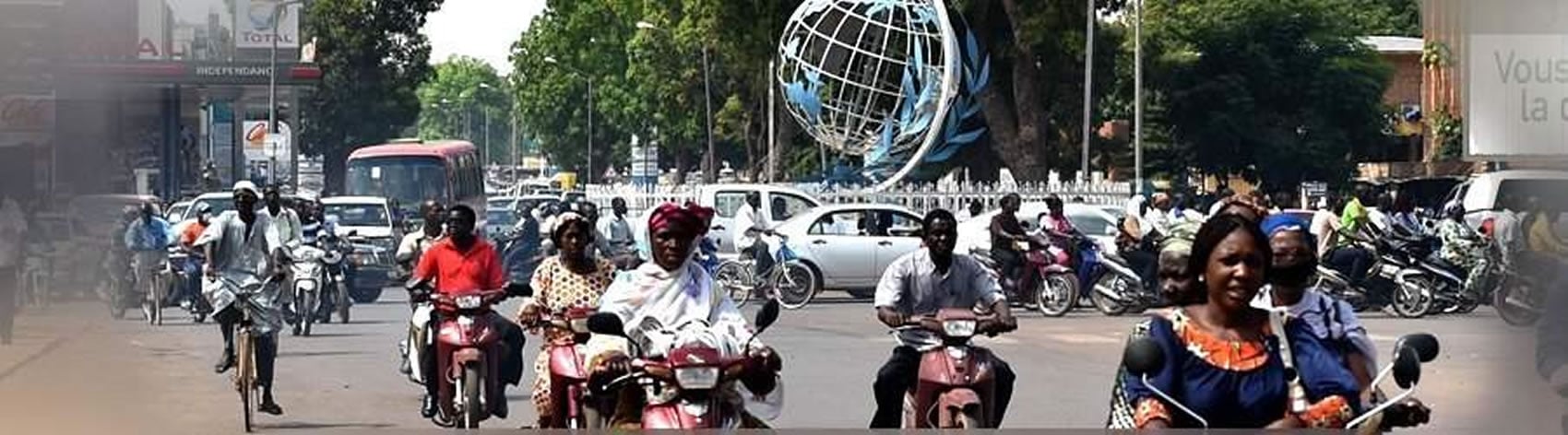
Measuring the pulse of Economic Transformation in West Africa
West Africa is at the heart of Africa’s transformation. With a projected growth rate of 7.4 per cent in 2014, it is the fastest growing region in the continent. As many of its countries undergo a strong stabilization, emerge from conflict, or even rise to middle income status, the region begins to reap the fruits of its regional and global integration. A global demand for expert opinions and analysis is rising rapidly.
| 07 Jul 2025 |
World Rural Development Day - How fertilizers can unlock agricultural yield potential in AfricaBy Noel Ujeneza "Produce more": such is the motto and the driver for commercial agriculture, whatever the size of the farm. Investors, decision-makers and donors understand the importance of factors that boost agricultural productivity. Among such factors, fertilizers stand out by the multiple impact they can have, notwithstanding some debates and reservations concerning their use. Their role was highlighted during a recent visit to Zimbabwe by the African Development Bank's Africa Fertilizer Financing Mechanism. The success of African farmers is crucial to the livelihoods and wellbeing... |
| 28 Mar 2025 |
Reimagining Fertilizer Use in Africa: A Smarter Path to Agricultural GrowthBy Joel Thibaut Konan Africa’s population is soaring — set to surpass 2.5 billion by 2050 — and the continent stands at a crossroads in its agricultural future. With farming anchoring most economies, the pressure is on: food demand is rising fast, while climate change, soil degradation, and water stress threaten yields. Fertilizers can unlock Africa’s agricultural potential. Used wisely, they boost productivity, strengthen food security, and drive economic growth. But today, fertilizer use across the continent is often inefficient, unsustainable, or simply out of reach... |
| 21 Mar 2025 |
Mapping The Future: How Soil Data Transforms Agriculture and Improves Soil Quality in Sub-Saharan Africaby Joel Konan Across Sub-Saharan Africa, a data revolution is steadily transforming agriculture. By combining information from farmers, agribusinesses, research institutions, and government, countries are developing powerful new approaches to soil health management. The results? Improved crop yields, more sustainable farming practices, and enhanced food security. Drawing from success stories in Kenya, Ethiopia, Rwanda, and Sierra Leone, we’ll explore how soil data is leveraged to enhance soil fertility, develop localized solutions, and optimize fertilizer use across the continent.... |
| 11 Jul 2019 |
Greek lessons for West Africa (II): Borrowing and the importance of intergenerational equalitySeveral policy-makers have cautioned African countries to carefully learn lessons from the Greek debt crisis. Given the importance of debt sustainability to supporting economic growth in Africa and elsewhere, this article is the second in a series of blog entries aimed at promoting debate and distilling the key lessons of the Greek crisis that are applicable in West African countries. In the past five years, inclusive growth has become the “name of the game”: it is a central feature of the AfDB’s 2013-2022 Ten Year Strategy, as well as those of other development actors such as the World... |
| 11 Jul 2019 |
Industrialisation in West Africa (2): global or regional strategies?A previous post took stock of industrial development in West Africa. It was explained that at a time when the international community, including the African Development Bank, elevates industrialisation to a priority range for fighting poverty and exclusion, this process lags behind in the region. This post focuses on some of the strategies that could be implemented in order for the West African countries to move forward. Overall developments in the last decades, including trade liberalisation, international fragmentation of value chains, and the emergence of new industrialized... |
| 17 Jul 2017 |
Addressing infrastructure constraints to inclusive growth in LiberiaA previous post discussed some of the challenges Liberia is facing in the light of weaker economic growth and how it should focus its efforts on improving the business environment, increasing productivity and value-added in agriculture, and attracting investment in non-extractive sectors. A key part of this effort is to address Liberia’s severely inadequate energy and road infrastructure, which have been identified by various analyses[1] as a critical binding constraint to private sector development and diversification, as well as public service delivery. As such, the... |
| 15 Mar 2017 |
Cabo Verde at a threshold: Changing growth paradigmIn 2010, the African Development Bank’s President applauded Cabo Verde for having achieved a “policy induced graduation” into the middle-income country group against all odds, as opposed to reaching it through a drive by natural resources. From 1995 to 2007, Cabo Verde’s real GDP growth rate averaged 7.2%, while the GDP per capita grew 5.1% a year over the same period. Good governance, political stability and sound economic policies have been the key ingredients to the country’s success. In achieving such success, a 2012 report by the AfDB entitled “Cabo Verde: the Road Ahead” identified... |
| 25 Nov 2016 |
How to reverse the African propensity to import fish?The African continent has 54 states, 38 of which have sea access and profit from maritime fishing. Several African lakes (with the two largest ones in the world being lakes Tanganyika and Victoria) and its big rivers (Nile, Niger, Congo, Zambezi) are also rich in fish. In 2015, fish production in Africa amounted to 11 million tons, with 85% coming from catch fishing and 15% from fish farming, accounted for 7% of the world production. Source : www.seaaroundus.org/data/#/eez and unstats.un.org/unsd However, Africa’s exclusive economic zones (EEZ)[1] are not as... |
| 16 Nov 2016 |
Seeking to develop new sources of growth in LiberiaAn August 2014 blog post during the escalation of the Ebola Virus Disease (EVD) epidemic in Liberia considered how, beyond the health crisis, the outbreak was having a significant impact on Liberia’s economy. Two years down the line, the threat of the virus has receded, yet the economy is facing other challenges, most prominently the drop in commodity prices. The country is at a critical juncture where it should increase attention on enabling the private sector to drive inclusive growth. This post is the first of a short series dedicated to Liberia to discuss some of the issues involved in... |
| 03 Oct 2016 |
La Maîtrise de l’eau pour multi-usages, un défi important pour la réalisation des objectifs des Top 5 de la BAD.L’Afrique est à la croisée des chemins avec la mise en œuvre des objectifs de développement durable (ODD). Située au centre de l’attention des experts du monde du développement et des décideurs - comme l’a montré la récente 71e Assemblée générale des Nations Unies, la transition ODD-ODM nous mène à un constat de « non-évolution ». Les différentes conceptions énoncées ainsi que les multiples indicateurs proposés n’ont pas permis d’atteindre le développement durable nécessaire pour l’Afrique. Manque de pertinence des données disponibles ou déficit de coordination ?... |