
Vous êtes ici
Mthuli Ncube
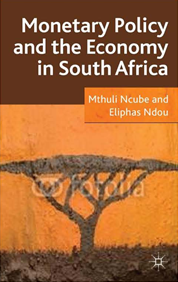
Monetary Policy and the Economy in South Africa
Combien coûte la fragilité à l’Afrique ?
State fragility and breakdown, along with violent conflict, pose significant risks to global and regional security. Most contemporary armed conflicts take place within states, and the majority of their victims are civilians. Conflict and fragility impede efforts to reduce poverty, and the prevention of conflict through development is cheaper than dealing with the aftermath of conflict. When violent conflict breaks out, development is derailed and conflict is development in reverse. Conflicts not only cause a contraction of output, they also destroy infrastructure.
How Costly is Fragility in Africa?
State fragility and breakdown, along with violent conflict, pose significant risks to global and regional security. Most contemporary armed conflicts take place within states, and the majority of their victims are civilians. Conflict and fragility impede efforts to reduce poverty, and the prevention of conflict through development is cheaper than dealing with the aftermath of conflict. When violent conflict breaks out, development is derailed and conflict is development in reverse. Conflicts not only cause a contraction of output, they also destroy infrastructure.
L’impact de la politique d’assouplissement quantitatif aux États-Unis, au Japon, au Royaume-Uni et en Europe
In a recent Book I co-authored with Prof. Kjell Hausken on “Quantitative Easing and Its Impact in the US, Japan, the UK and Europe” , we analyze, empirically, the effects of quantitative easing (QE) on interest rates and the economies of the USA, Japan, the UK, and Europe.
The Impact of Quantitative Easing in the US, Japan, the UK and Europe
In a recent Book I co-authored with Prof. Kjell Hausken on “Quantitative Easing and Its Impact in the US, Japan, the UK and Europe” , we analyze, empirically, the effects of quantitative easing (QE) on interest rates and the economies of the USA, Japan, the UK, and Europe.
Inégalités, croissance et pauvreté dans la région Moyen-Orient et Afrique du Nord (MENA)
The wave of protests and unrest that swept across the Middle East and North Africa (MENA) region since 2011 has continued in different forms. In addition to demands for more economic and political inclusion, the protests had been largely sparked by a refusal to tolerate any longer the gross socio-economic inequality perpetuated by long-entrenched “elites” in power. In many countries today, the issue of inequality has come to the front burner of international and national discourse with a view to finding solutions.
Inequality, Economic Growth, and Poverty in the Middle East and North Africa (MENA)
The wave of protests and unrest that swept across the Middle East and North Africa (MENA) region since 2011 has continued in different forms. In addition to demands for more economic and political inclusion, the protests had been largely sparked by a refusal to tolerate any longer the gross socio-economic inequality perpetuated by long-entrenched “elites” in power. In many countries today, the issue of inequality has come to the front burner of international and national discourse with a view to finding solutions.
Politiques d’assouplissement quantitatif : quel impact sur l’Afrique et ses marchés financiers ?
Private capital flows to emerging markets are benefiting from an overall supportive global environment, in particular improved global outlook and strong projected growth in Africa. While the monetary policy of the Federal Reserve Bank has been shifting from quantitative easing to a tightening mode, the European Central Bank and the Bank of Japan are expected to undertake further monetary easing. Hence private capital flows to Africa’s emerging and frontier markets are expected to be higher than at the beginning of 2014. Nevertheless, risks of sudden stops or even reversals remain.
The impact of quantitative easing on Africa and its financial markets
Private capital flows to emerging markets are benefiting from an overall supportive global environment, in particular improved global outlook and strong projected growth in Africa. While the monetary policy of the Federal Reserve Bank has been shifting from quantitative easing to a tightening mode, the European Central Bank and the Bank of Japan are expected to undertake further monetary easing. Hence private capital flows to Africa’s emerging and frontier markets are expected to be higher than at the beginning of 2014. Nevertheless, risks of sudden stops or even reversals remain.
Can Africa’s extreme poverty be eliminated by 2030?
With the year 2015 – the MDG finishing line – approaching, post-2015 goals as they impact Africa need to be firmed. The goal of ending extreme poverty remains paramount. In this context, extreme poverty means living on a less than $1.25 a day (PPP, 2005 prices).