
Vous êtes ici
Mapping The Future: How Soil Data Transforms Agriculture and Improves Soil Quality in Sub-Saharan Africa
by Joel Konan
Across Sub-Saharan Africa, a data revolution is steadily transforming agriculture. By combining information from farmers, agribusinesses, research institutions, and government, countries are developing powerful new approaches to soil health management. The results? Improved crop yields, more sustainable farming practices, and enhanced food security.
Drawing from success stories in Kenya, Ethiopia, Rwanda, and Sierra Leone, we’ll explore how soil data is leveraged to enhance soil fertility, develop localized solutions, and optimize fertilizer use across the continent.
Data integration and mapping: the foundation of modern soil health management
Effective soil health management begins with robust data collection. Through collaborative efforts across multiple stakeholders, countries are developing comprehensive pictures of soil health status and fertilizer use patterns. This data includes soil health indicators such as pH levels, organic matter content, nutrient concentration (nitrogen, phosphorus, potassium), and micronutrient deficiencies. Additionally, it includes detailed fertilizer application records, documenting the type, quantity, and timing of fertilizer use by farmers.
Using Geographic Information Systems (GIS), countries can generate detailed soil maps highlighting critical soil health indicators. Kenya has used this approach to identify regional nutrient deficiencies and target fertilizer interventions. Similarly, Ethiopia employs GIS-based soil maps to visualize nutrient deficiencies and guide region-specific fertilizer recommendations.
The key to success? Real-time data integration keeps these maps current. Continuous feedback from stakeholders through field observations, including yield data, fertilizer application updates, and weather information, ensures that maps reflect current soil conditions and fertilizer requirements.
Identifying soil health challenges: precision diagnosis
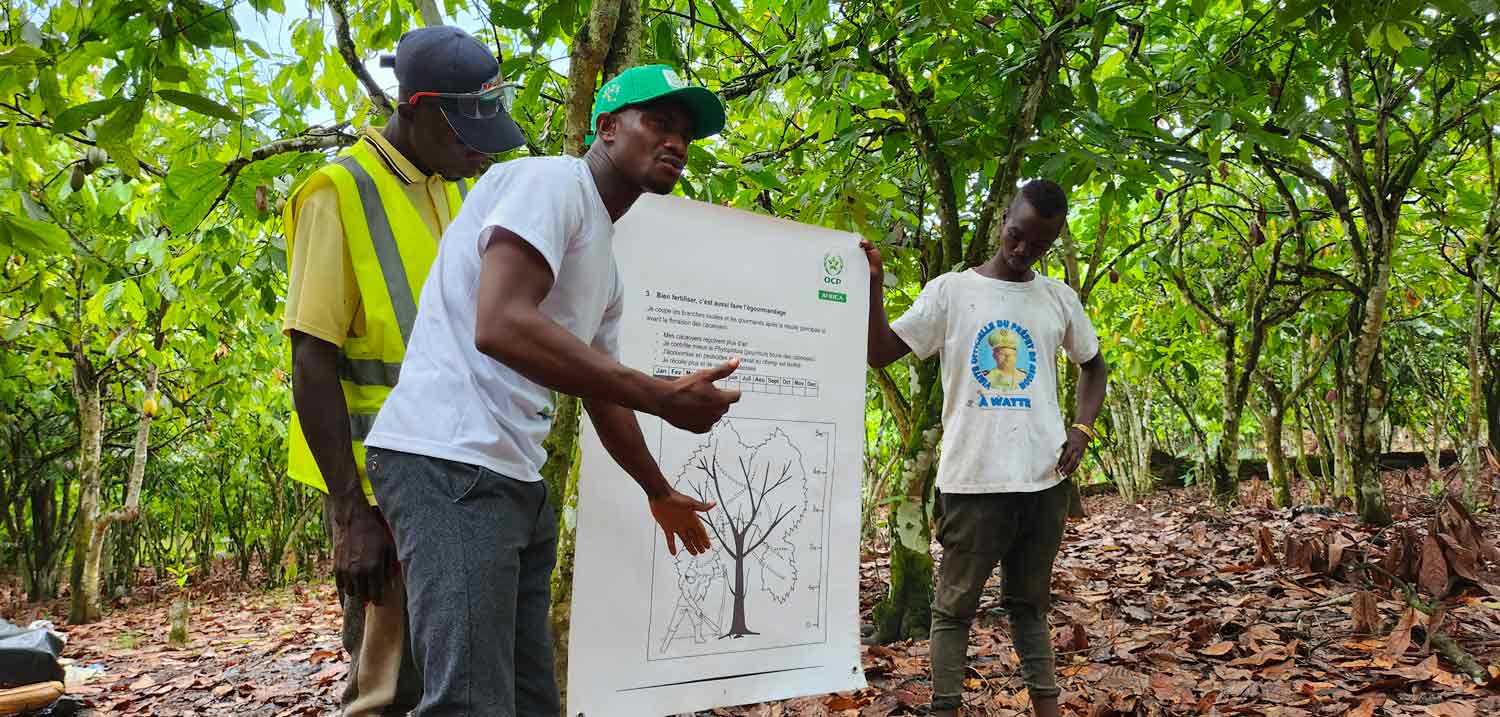
Advanced soil mapping techniques are helping countries identify areas of degradation, including erosion, compaction, and nutrient depletion. In regions experiencing severe degradation, these maps guide targeted interventions to restore soil health. Based on precise soil mapping data, Ethiopia and Sierra Leone have implemented soil conservation measures such as terracing and cover cropping.
Map analysis reveals disparities between soil nutrient needs and actual fertilizer applications. Rwanda has optimized its fertilizer recommendations by addressing these mismatches, resulting in reduced over-application and enhanced nutrient efficiency.
Soil maps facilitate customized interventions based on specific regional conditions. For instance, they enable strategic lime application in regions with low pH levels. Furthermore, soil maps allow for targeted nitrogen supplementation in nutrient-deficient zones. Additionally, they facilitate the implementation of balanced fertilizer programs to address nutrient imbalances. Finally, soil maps contribute to optimal land utilization through crop-specific suitability analysis.

Source: © Ministry of Agriculture, Forestry and Food Security / Sierra Leone
Soil Suitability Mapping involves studying and mapping soils in an area to see which crops or land uses are best suited. It looks at soil properties, environmental conditions, and other key factors to identify the best use for each area. The main goal is to use land efficiently, improve productivity, and promote sustainable practices. Aligning agricultural practices with the soil’s natural features helps ensure better use of land resources.
How do soil suitability mapping and soil fertility mapping differ?
|
Aspect |
Soil Suitability Map |
Soil Fertility Map |
|
Focus |
Identifies the most suitable crops or land uses |
Assesses nutrient content and availability |
|
Purpose |
Optimizes land use and recommends suitable crops |
Improves yield by addressing nutrient deficiencies or excess. |
|
Factors |
Soil texture, pH, topography, climate, water availability, organic matter, erosion risk |
Nutrient levels, pH, organic matter, cation exchange capacity, soil microbial activity |
|
Goal |
Sustainable land management and effective crop planning |
Soil nutrient management for enhanced fertility |
|
Outcome |
Recommendations for land use based on suitability |
Fertilizer recommendations and nutrient management strategies |
Designing Soil Health Management Projects to Promote Sustainable Agriculture
With accurate soil data, fertilizer recommendations can be tailored to local conditions, ensuring optimal timing and quantity while minimizing waste. Kenya’s fertilizer strategy exemplifies this approach, using soil fertility maps to guide precise application that minimizes environmental impact while maximizing yields.
Integrated soil fertility management involves the combination of chemical fertilizers, organic matter, and conservation practices to sustain soil health. Key practices include the strategic use of compost and manure, as well as crop rotation and intercropping to improve soil structure and nutrient cycling.
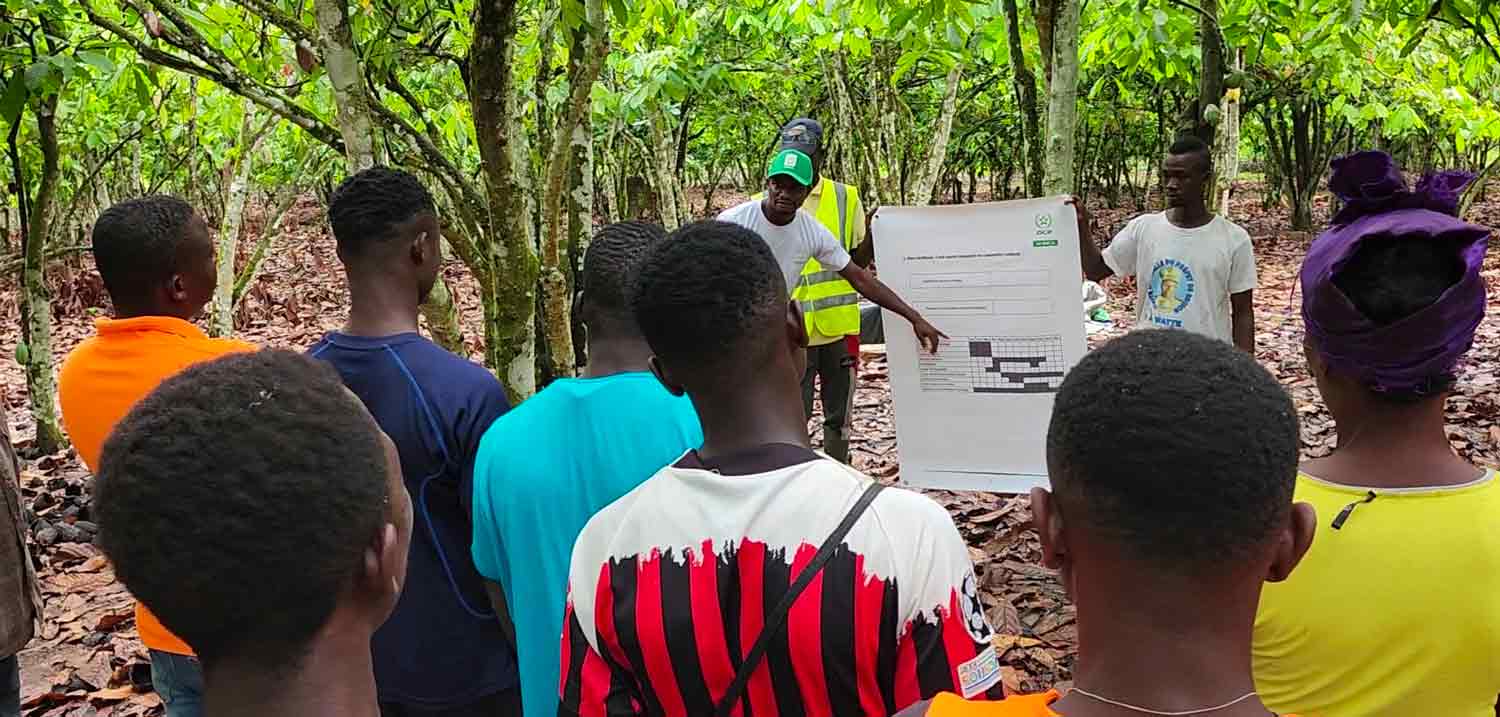
Training is crucial for stakeholders to interpret soil maps and implement recommendations effectively. Through extension services and structured training programs, local communities gain practical skills in map interpretation and application. Ethiopia has successfully integrated farmer training programs that improve soil health and nutrient management through using soil fertility maps.
Leveraging Stakeholder Engagement for Better Outcomes
Multi-stakeholder platforms facilitate the sharing of soil data, aligning farmers, governments, agribusinesses, and NGOs around common goals. In Rwanda, the government collaborates with private sector entities and farmers to share insights from soil maps, leading to greater alignment on agricultural strategies.
Feedback from farmers is critical in refining soil fertility maps and project design. Including local knowledge allows for the adjustment of soil health strategies based on real-world farmer experience and observations. To encourage broader stakeholder participation, governments can offer incentives such as access to credit or subsidies for sustainable inputs.
Measuring Success: Monitoring and Evaluation
Farmers can measure the success of soil health management projects by looking at improvements in soil health. They can track such improvements by conducting follow-up soil tests and creating fertility maps. In addition, farmers can check the increase in crop yields, which shows that they are using fertilizer more effectively and better managing their soil. Other performance metrics include measuring how many farmers use the best soil management practices, such as Integrated Soil Fertility Management (ISFM) or following fertilizer recommendations from soil maps
The most effective projects incorporate continuous monitoring and design improvement, creating an ongoing cycle of learning and adaptation. Regular feedback from farmers and other stakeholders helps adjust approaches as soil conditions change and new challenges emerge.
Policy Support and Resource Mobilization
Governments should promote policies that encourage the use of soil health maps and efficient fertilizer use. This may include the development of national strategies for soil fertility management based on data-driven insights. Kenya’s National Fertilizer Policy, for example, supports the use of soil fertility maps to guide fertilizer application and improve agricultural productivity. By demonstrating the value of data-driven soil health programs in improving agricultural sustainability and enhancing food security, countries are successfully engaging international donors and development partners to support these initiatives.
Overview of the methodology applied by Excellence in Agronomy (AgWise Workflow)
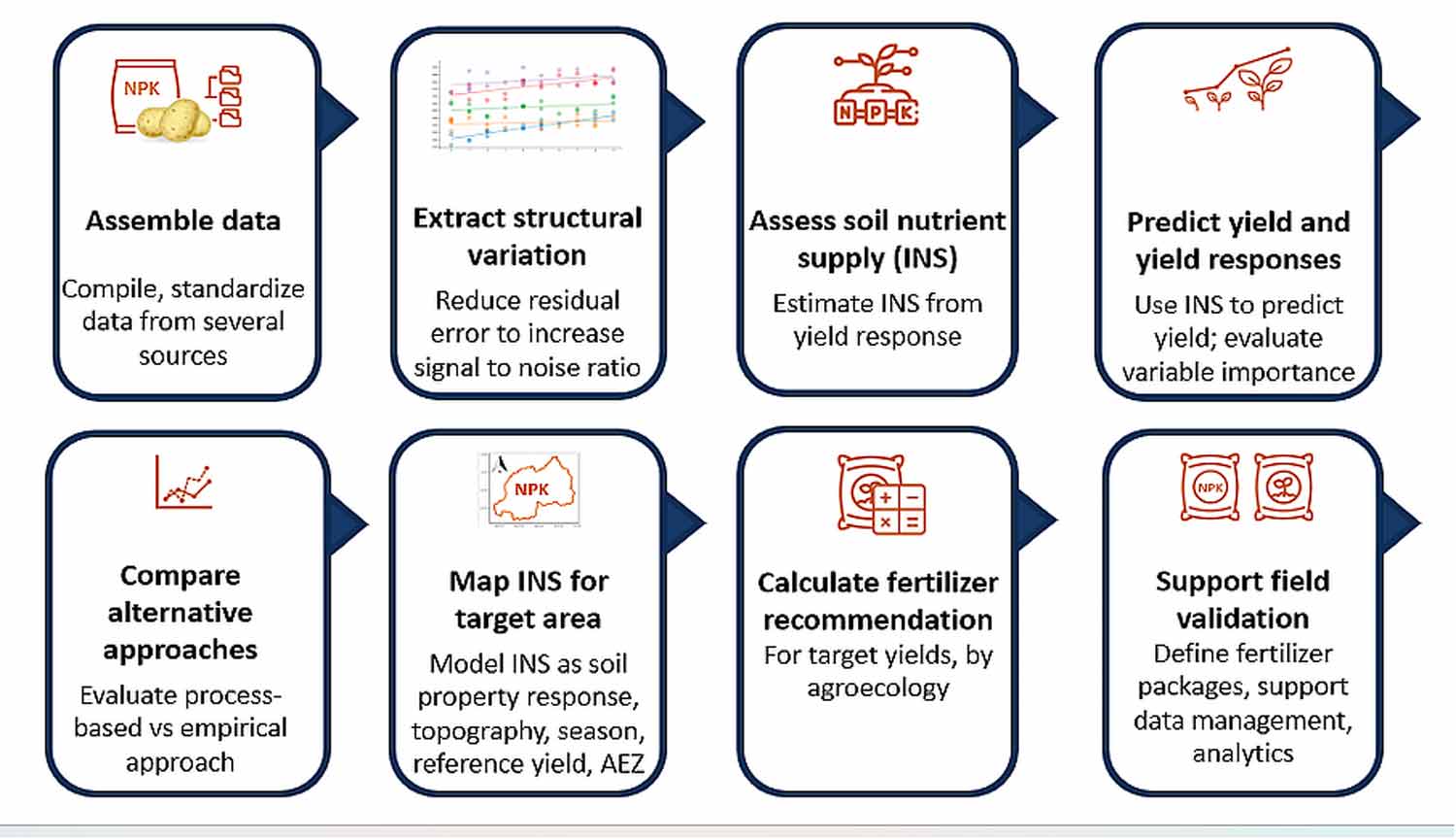
Source: Excellence in Agronomy Initiative and its Partners
Success stories from across the region
Several African countries leverage soil fertility mapping to revolutionize their agricultural practices and improve both their crop yields and soil health. Specifically, the Kenya Soil Health Program uses GIS-based soil fertility maps to target fertilizer application, improve nutrient management, and enhance crop yields. Building on this success, this initiative has led to better fertilizer use efficiency, reducing costs for farmers while improving soil health.
Similarly, Ethiopia has utilized soil fertility mapping to tailor fertilizer recommendations and optimize nutrient use in regions facing distinct challenges, such as low phosphorus availability. As a result, through targeted interventions, Ethiopia has significantly improved maize and teff yields.
Moreover, Rwanda’s national soil fertility monitoring system has integrated soil maps into its fertilizer recommendations. Consequently, this data-driven approach has helped improve yields by targeting specific soil deficiencies and promoting sustainable farming practices like crop rotation and organic amendments.
Finally, Sierra Leone’s Ministry of Agriculture completed a comprehensive national soil analysis, which forms the basis for its soil fertility mapping and fertilizer recommendations. These efforts have been instrumental in addressing soil degradation and improving agricultural productivity, particularly in rice and cassava farming.
Leveraging stakeholder data through soil fertility maps is pivotal in optimizing fertilizer use and improving soil health in Sub-Saharan Africa. By integrating information from multiple sources, countries are successfully designing and implementing data-driven soil health management projects that boost crop yields, promote sustainable farming, and improve food security. Moving forward, continued investment in soil mapping technologies, stakeholder collaboration, and policy advocacy will be crucial to scaling these successes across the continent.
About the author:
Joel Konan is a fertilizer specialist at the Africa Fertilizer Financing Mechanism Secretariat. His expertise includes local and global value chain development, market and policy analysis, agriculture, soil health management, and regenerative agriculture.
Farah Nguegan at the Africa Fertilizer Financing Mechanism contributed to this blog.