
You are here
Poverty Reduction
The Dynamics of Entrepreneurship and Structural Transformation in Africa
Africa needs accelerated structural transformation in order to take the bulk of its population out of poverty. This requires deeper investment in factors leading to growth-enhancing structural change. African countries need to diversify and expand the sources of economic growth while creating opportunities for more inclusiveness. The vision leading to most African countries attaining middle income status by 2060 cannot be delinked from the prerequisite of creating technological-driven and competitive industries in Africa.
A Promising Outlook
U.S.Treasury Awards - Debating Africa and the Global Economy on US Public Radio

Multilateral aid for the 21st Century
Getting it right in the Sahel
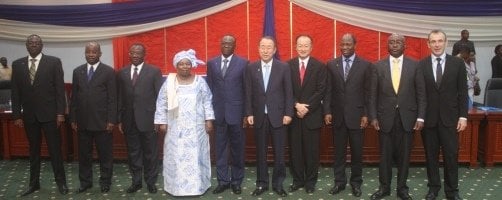
Last week I joined UN Secretary-General Ban Ki-moon, World Bank President Jim Yong Kim, African Union Commission Chair Nkosazana Dlamini-Zuma and EU Commissioner for Development Andris Piebalgs on a visit to the Sahel region.
It was a first.
Africa and America in Washington: How far have we got?
50 Africa leaders convene in Washington for a historic meeting with President Obama this week. Pedestrians and motorists caught up in the inevitable traffic jams around the White House may well be asking how far they have got, and where they are heading.
Isolate Ebola, not the countries
At the end of last week I visited Liberia and Sierra Leone, two of the poorest countries in Sub Saharan Africa, and also the most affected by the Ebola outbreak. Ebola has taken over 1500 lives in West Africa, three-quarters of them in those two countries. And the pace appears to quicken: 40% of the cases have appeared in the last three weeks.
Both countries have declared states of emergency: the placards on the streets of Monrovia and Freetown bear the message that for as long as we still seek a cure for the virus, then prevention is the best cure.
Africa starts to become master of its own destiny
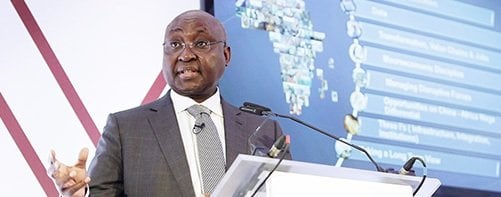
Africa’s economy has grown fourfold since the turn of the millennium, with sub-Saharan Africa outperforming the rest of the world in terms of economic growth and at long last banishing any doubts about the continent’s upward trajectory.
How Costly is Fragility in Africa?
State fragility and breakdown, along with violent conflict, pose significant risks to global and regional security. Most contemporary armed conflicts take place within states, and the majority of their victims are civilians. Conflict and fragility impede efforts to reduce poverty, and the prevention of conflict through development is cheaper than dealing with the aftermath of conflict. When violent conflict breaks out, development is derailed and conflict is development in reverse. Conflicts not only cause a contraction of output, they also destroy infrastructure.
Can Africa’s extreme poverty be eliminated by 2030?
With the year 2015 – the MDG finishing line – approaching, post-2015 goals as they impact Africa need to be firmed. The goal of ending extreme poverty remains paramount. In this context, extreme poverty means living on a less than $1.25 a day (PPP, 2005 prices).
Food Security: A film dedicated to the Food Crisis Prevention Network (RPCA) tells a Sahel and West Africa success story
